
“We need a corporate catering service” can mean very different things depending on who’s asking. A 15-person leadership lunch and a 1,000-person channel partner meet both fall under that phrase, but they need completely different setups, timing, and service styles. A lot of the frustration companies run into with catering doesn’t actually come from the food itself. It comes from booking the wrong format for the occasion.
This post breaks down the real formats a corporate catering partner should be able to offer, so you can match the setup to your event instead of defaulting to the same buffet every single time.
Why the Format Matters as Much as the Menu
The energy of an event is shaped by how food is served, not just what’s on the plate. A seated lunch for a leadership team calls for something calm and efficient. A networking mixer wants food that people can eat standing up while they move between conversations. A large channel partner meet with hundreds of guests needs a setup that can serve everyone without long queues or cold food by the time it reaches the back of the line.
Choosing the format first, and building the menu around it, tends to produce a much smoother event than picking a menu and hoping the service style works itself out.
The Corporate Catering Formats Worth Knowing
1. Floating Appetizers
Guests mingle while finger food circulates, typically followed by a fuller buffet later in the event. This works well for events where conversation and movement matter more than a formal seated meal — think product launches, town halls, or networking evenings.
2. The Buffet Spread
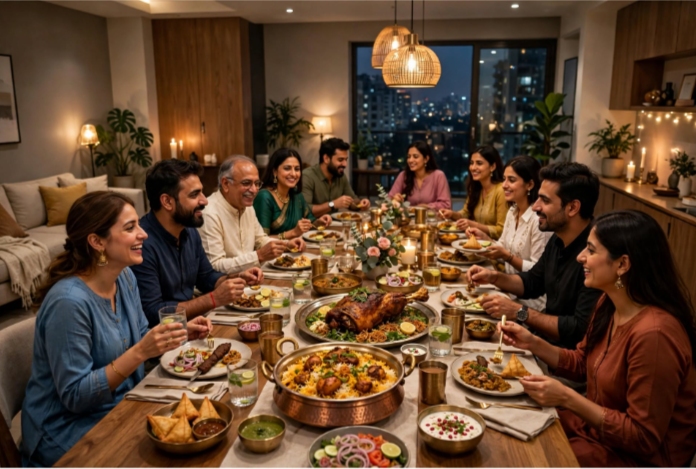
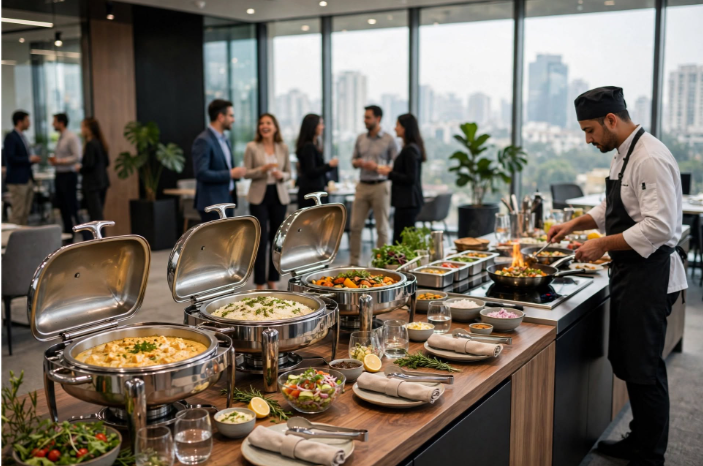
The most familiar format, and still one of the most reliable. A well-organized buffet with a clear variety of dishes gives guests choice and lets people move at their own pace. It’s a dependable default for most office events and mid-sized gatherings.
3. Live Counter
Chefs cook in front of guests — samosas frying crisp, seekh kebabs on the grill, food made to order rather than sitting in a chafing dish. This adds a layer of energy and freshness that pre-plated buffets can’t match, and it tends to be a highlight at larger company celebrations.
4. High Tea Catering
A lighter, more informal spread that can pull from multiple regional cuisines at once — South Indian dosas and idlis, Maharashtrian poha and misal, Punjabi samosas, alongside continental sandwiches, mini quiches, and fresh fruit. Perfect for afternoon client meetings or workshops that don’t call for a heavy meal.
5. Coffee & Beverage Service
Can stand alone for a shorter seminar or pair with any of the above formats as an all-day artisanal refreshment and beverage station throughout the day.
6. Grazing Table
A visually striking spread of artisanal cheeses, dips, lavash, gourmet snacks, fresh fruits, and curated bites, designed for guests to mingle and pick as they go. Works particularly well for smaller, more upscale executive gatherings where presentation and aesthetics matter.
7. Hamper & Gifting Boxes
Not an event format strictly, but an essential corporate need — bespoke curated boxes of signature snacks, artisanal chutneys, gourmet savories, and sweets for festive gifting, client appreciation, or employee milestones.
Matching Format to Event Size
- Small Gatherings (15 to 50 people): Board lunches, VIP client meetings, and leadership summits tend to work best with a premium buffet or a curated grazing table, both of which feel appropriately scaled without overwhelming an intimate room.
- Mid-Sized Events (50 to 300 people): Annual office parties, milestone celebrations, and product launches often benefit from combining a live counter with circulating floating appetizers, keeping energy high across a dynamic guest list.
- Large-Scale Events (300+ people): For channel partner meets, multi-day conferences, and corporate galas, a combination of multiple live counters and twin buffet spreads is usually necessary to maintain fast service flow without long queues or bottlenecks.
What “Multi-Cuisine” Actually Means for a Corporate Setting
A good corporate catering partner isn’t offering just one cuisine. Office gatherings usually have a genuinely mixed crowd — different dietary preferences, varied regional tastes, and often international colleagues or clients in the room. A menu that spans global starters, South Indian and Maharashtrian breakfast specialties, Thai and Mediterranean mains, alongside authentic comfort dishes like biryani and kebabs, gives everyone at the table something they’ll genuinely enjoy, rather than a narrow menu that leaves half the room searching for options.
This is also where a caterer’s operational range matters. A culinary team that can authentically execute across cuisines, rather than adapting a single base gravy to mimic variety, consistently delivers a superior dining experience across large headcounts.
What to Ask a Corporate Catering Partner Before You Book
A few direct questions reveal a lot before locking in your catering contract:
- Can they comfortably scale from your smallest expected event to your largest? A caterer who only handles small lunches may lack the logistics for a 500-guest summit, while a mass caterer might overcomplicate a private board lunch.
- Do they provide full-service trained staff or just food delivery? Live counters, beverage stations, and circulating appetizers require professional, well-groomed on-site banquet staff, not merely delivery drivers.
- Do they have a proven track record with similar corporate events in Mumbai? Ask for verified event examples and corporate references rather than generic assurances. Experienced caterers will gladly walk you through their logistical blueprints.
Why This Decision Is Worth Getting Right the First Time
Re-booking a caterer mid-planning or discovering a format mismatch on the day of the event is one of the most stressful experiences in corporate event management. A live station without enough chefs creates 20-minute queues. A grazing table set up for a 300-person crowd runs empty within minutes. A full-scale buffet for a 15-person board meeting feels cumbersome and impersonal.
None of these are food quality issues — they are format miscalculations. Partnering with a corporate catering team that takes the time to consult on headcount, venue acoustics, and flow ensures your event runs effortlessly.
Choosing the Right Setup for Your Next Event
The best corporate catering service isn’t defined by having an endless catalogue of dishes. It’s the partner who helps you select the exact service format tailored to your gathering and executes it flawlessly at scale.
At The Bohri Food Co., our dedicated corporate catering division, Pure Taste Co., specializes in this exact spectrum — from intimate leadership executive dining to 1,000+ guest channel partner celebrations across Mumbai. Whether you require live charcoal counters, elegant grazing spreads, or multi-cuisine buffets, our team handles end-to-end execution with bone china crockery, polished service staff, and induction-safe warmers.
Planning your next corporate event? Explore our Corporate Catering & Events Service or get in touch with our catering desk directly on 8711-8711-08 to discuss a tailored format.
Frequently Asked Questions
1. What is the difference between a buffet spread and a live counter?
A buffet spread is pre-arranged in chafing dishes for guests to serve themselves at their own pace, whereas a live counter features professional chefs cooking dishes fresh to order (e.g., frying samosas, grilling kebabs, tossed noodles), introducing dynamic culinary action and peak freshness.
2. How do I decide which catering format suits my event?
Evaluate your guest count and event objective. Formal, seated gatherings typically suit an executive buffet or grazing table, while active networking mixers benefit most from live counters and circulating floating appetizers.
3. Can corporate catering handle both vegetarian and non-vegetarian guests?
Yes. A balanced corporate menu offers dedicated, clearly separated vegetarian and non-vegetarian selections across starters, mains, and desserts, accommodating diverse regional and dietary preferences.
4. What is floating appetizer service?
Floating service involves trained waitstaff circulating bite-sized finger foods and starters directly among standing guests, keeping social interaction fluid without interrupting conversations.
5. How far in advance should I book corporate catering in Mumbai?
We recommend booking at least 3 to 7 business days in advance for corporate gatherings to allow custom menu tastings and staff scheduling. For large annual events or peak festive seasons, 2 to 3 weeks notice is advised.
6. Does corporate catering include service staff, or just the food?
Pure Taste Co. offers comprehensive full-service catering, including well-dressed waitstaff, live station chefs, kitchen assistants, crockery, cutlery, and complete post-event cleanup.
7. What is the minimum group size for corporate catering?
Our corporate catering setups start from 15 guests (or ₹30,000 minimum billing) for boutique board meetings up to 1,000+ attendees for large company conferences.
8. Is high tea catering suitable for a full office lunch?
High tea is designed as a lighter, informal assortment best suited for mid-morning meetings, afternoon breakout sessions, or client teas rather than a hearty lunch replacement.
9. What is a grazing table, and when should I choose it?
A grazing table is an artfully styled table filled with artisanal cheeses, dips, breads, fresh and dried fruits, and gourmet bites. It is ideal for high-end executive mixers, brand launches, and PR events where visual elegance is paramount.
10. Can I combine multiple catering formats for one event?
Absolutely. Most corporate summits successfully combine floating appetizers during reception hours, followed by twin live cooking stations and an elaborate main course buffet spread.